2/22/14

Cuban Sizzle Crisis

Salt Pickles
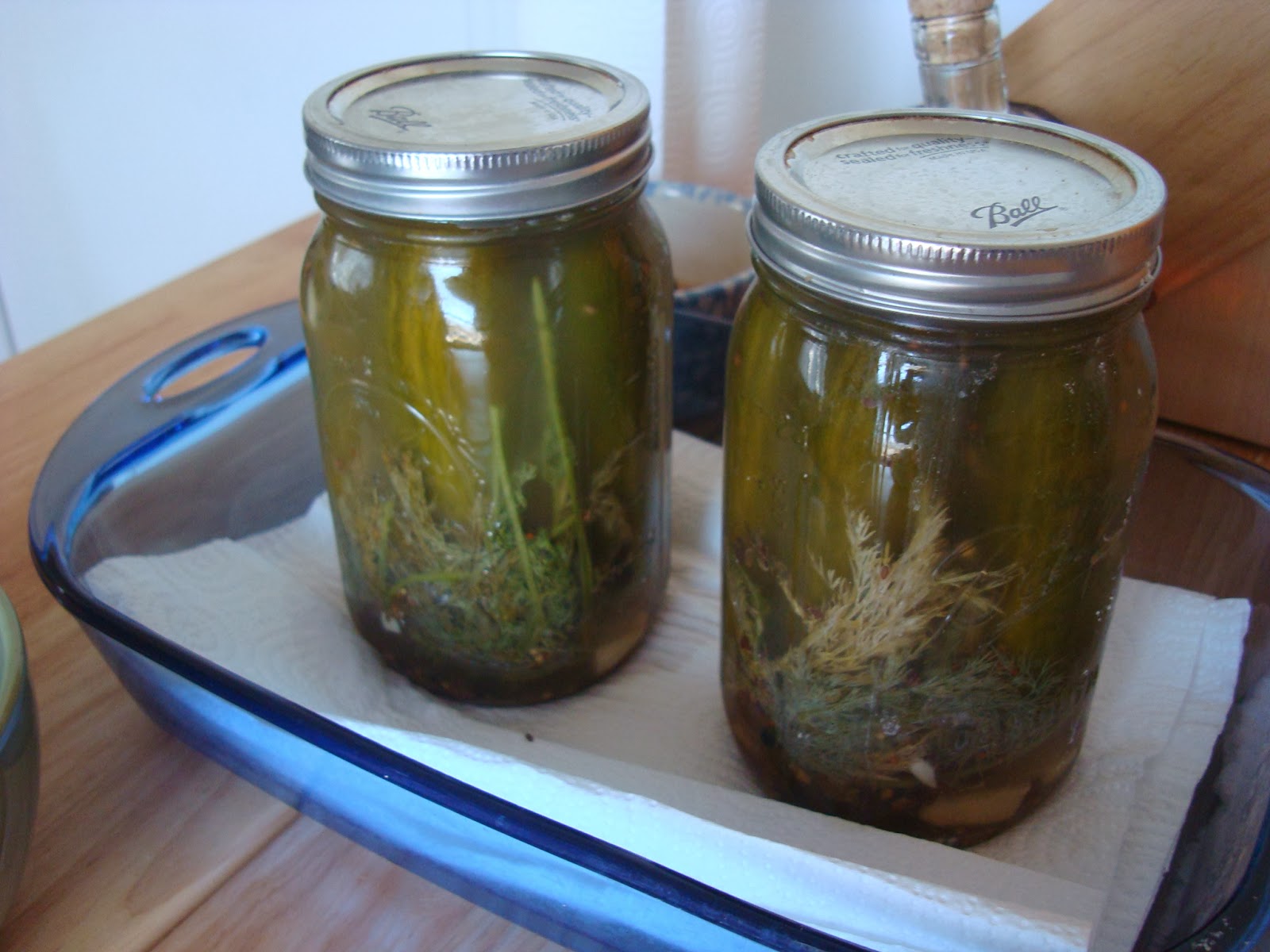
Last week, I started a batch of Full Sour Pickles. I didn't even slice these. I just shoved them in the jar whole and, hopefully, I'll end up with some proper movie theater style pickles.


In addition to dill and garlic, I added mixed pickling spice. I got it at a local hippie store. I don't know what all it has in it, but it's given the cukes an amazing aroma.

One week in, here's how they look:


The dill looks a little bleached out and the brine is cloudy, but these smell great and they still have a week to go.

In addition to the pickle experiments, I've started doing a weekly batch of quick pickles. Just to have some on hand. I added some pickling spice to this week's batch, just to see what it does.

Hot Sauce
Following the traditions of the McIlhenny family and some lady named Cholula, I started my own batch of fermented hot sauce. The McIlhennies use only Tabasco peppers. Cholula and Tapatío use Arboles and Piquins. And for you buffalo wing fanatics, Frank's uses Cayennes. For my masterpiece, I used Aji Dulces and Habañeros.


I stemmed, seeded, and half the peppers.


Then mixed them with salt and pureed them.


Now, they need to ferment for a month. In the dark. Apparently, they'll lose all their color if they ferment in the light.


Habañero
Means "from Havana" in Spanish. These peppers came to the US from the Caribbean, but come from South America originally. They've found habañeros in domestic cave sites dating back to 6500 BCE. Which means people were eating these peppers before the cow was domesticated.


Habañeros are hot. Really hot. They average over 200 thousand units on Wilbur Scoville's famous scale. This makes them over three times as hot as piquins, twice as hot as tabascos, ten times as hot as a cayenne, and thirty times as hot as a jalapeño.

In 2000, Guinness Book rated the habañero as the hottest pepper in the world. It's since been displaced by a series of contenders. The current hottest pepper is the Carolina Reaper. It can reach peaks of over 2 million Scoville units. Basically the low end of the legal range for pepper spray in the US.

Try one!


Parting Shot
The temps have shot up to the 40s, which, in Illinois, is flip flop and tank top weather. My neighbors have spent the weekend lounging by the pool, working on their tans.

Some habits are hard to break, though. Baloo and Bagheera still huddle next to the heater. Even when it isn't plugged in.


Also, on the subject of Tapatío:


2/18/14

Icicle of Doom Update

After a full day of freezing rain and snow, the giant icicle next door grew. Both in length and girth. It's now a full story high.

What follows is uncensored photographic evidence of this grisly occurrence.

The images are graphic, so if you have a weak constitution, close your browser window now.


2/15/14

That's How It Tarragoes

Pickle Update
On Poker Night last week, I rolled out the Indian Spiced Carrots and the Korean Style Turnips. Both were met with approbation. The turnips didn't have much flavor by themselves, but they soaked up the onions, garlic, and pepper. They were savory with a bite. The carrots had sweet curry flavor and a lot of crunch.

The Real Deal Half Sours did not make a public appearance. My grandfather liked to tell a story about meeting a friend at a butcher shop. His friend ordered a number of steaks cut thick and a number cut very thin. When asked why, he explained the thick steaks were for him, the thin for when he had company. The Real Deal Half Sours were my thick steaks. Best pickles ever.

Sochi 2014
The Olympics this year are held in Stalin's favorite vacation locale, Sochi, apparently chosen because it stays warm year round. In honor of the Russian games, I made the traditional Russian delicacy, brined apples.


The brine contained honey and salt and I packed the apples with tarragon.


In the bottom of the jar, you can see a grape leaf. Grape leaves are rich in tannin, a chemical found naturally in plants. Tannins make coffee, tea, beer, and red wine bitter. They also help intensify your hangover. They give kidney beans their red color and add to the flavor of chocolate. Tannins in grape leaves keep pickles crispy without affecting the flavor.

Long story short: gross pickles. Aine said they tasted like cough syrup.

I also made some quick pickles last weekend, but the grocery store didn't have any dill. I just used leftover tarragon from the apples. Tarragon has a flavor similar to anise or fennel. They all taste sort of like licorice. Not a flavor you want on your cukes.

So, bunk pickles this week.

I'm sure the fault was mine, not the Russians'. For more information about what they like to eat, read this article.

Next up on the pickle schedule: Full Sour Kosher Dills.

Winter Wonderland
It's still cold. There's still half a foot of snow on everything.


This conversation happened the other day...
James: I can't wait until it's finally up in the 30s again.
Aine: I'll consider it warm when I can go out and the boogers don't freeze in my nose.

I know what you're thinking. That's a lot of talk for a married couple. We only do it to keep warm.

I bundle up Crankles before we go out.


But he seems to enjoy himself.


Look at this.


I don't know if you can tell from the picture, it's a free-hanging icicle, six or seven feet long.

Playing Catch
Fatty's favorite toy is the plastic ring from the top of a milk jug. She wants to play catch all day long every day without ceasing.


She doesn't seem to understand that humans need sleep, though. I often wake up in the morning with it lying next to my face.


Some days, she crawls under the desk, sits on her haunches, and tugs on cords like marionette strings until the router and speakers are sucked over the back of the desk. When I've had enough, I kick her out and close the door. But she still doesn't take no for an answer.


Curried Millet Cakes
In red pepper sauce and topped with coriander chutney. Another new dish we tried out. I took a picture because it looked super fancy.


Parting Shot
When I first saw this truck, I got excited because I thought Radon was a type of dinosaur. Apparently, it's some sort of gas. I'm sure it's nothing to worry about, though.


2/2/14

Keep Picklin' On

Garlic Check
After about 4 days, the fermenting in the garlic jars tapered off. So I drained the brine, added soy sauce, rice vinegar, water, and lots of brown sugar.


Now, the 6 month wait begins.

The carrots are also coming along nicely. They taste tart and crunchy. Yes, carrots are supposed to be crunchy, but now they have that pickled crunch instead of the raw crunch. It's a whole different kind of crunch. Along with fennel seeds, garlic, and bay leaves, the recipe called for pickling spices. Which I didn't have. And couldn't find at the grocery store. So I just used garam masala. The flavor so far is unusual, but very good. I've moved them to the fridge, but I'm going to give them another week before I unveil them at Poker Night.


One Good Turnip Deserves Another
Next on the fermenting agenda: Real Deal Half Sours and Korean Style Pickled Turnips.

I peeled and sliced the turnips and tossed them in sea salt to draw out the water. Here they are after only 30 minutes. Sweaty.


The salt pulled almost a cup of water in that amount of time.


This is basic osmosis. Osmosis is the movement of water and water always follows salt. So if you have cells or tissues and the salt concentration is greater on the outside, the water will move out. If the salt concentration is greater on the inside, the water will move in. Which is why you decrease your salt intake if you're retaining water or have high blood pressure. Water follows salt.

After three hours, I rinsed them and added green onions, garlic, and pepper flakes. These should be ready in about a week.


I also started a batch of Real Deal Half Sours, named thus, mostly because they're the real deal, but also because they are half sours. No vinegar here. Brine, dill, and garlic only. These will be 100% fermented and should be ready in a few days.


What's the Dill?
Why, you ask, do pickles get dill and garlic? Why not cilantro and shallots? What's the deal with dill?

Well, dill and garlic are tasty. The flavors combine well with the cucumbers. But most importantly, both dill and garlic are anti-microbial. Since fermenting is controlled decomposition, you are establishing the environment for a specific type of bacteria. You want to kill off all other bacteria and fungi. Along with the salt concentration, garlic and dill regulate how much bacteria and what kind will grow in the jar.

Garlic and dill have been used medicinally as far back as Ancient Egypt. There's evidence that garlic was cultivated during the building of the Great Pyramid at Giza. By the way, while the Great Pyramid was under construction, woolly mammoths were still alive. So that was a long time ago.


Garlic and dill were probably added to pickles to preserve them, the flavor being a fortunate side effect. Now we fresh pack them in vinegar and can them, retaining the garlic and dill out of tradition. Also because they're tasty.

Parting Shot
It's not enough that she steals toys from the dog and then taunts him.


Fatty has also claimed all of my shirts.


Snowy Time Mystery: extra credit on the final exam for anyone who guesses the reason this line of snow remained after a rain.


1/25/14

I've Got Chills

They're Multiplying
We had another snow last night and this morning the temperature jumped up to the 30s. This created a thick layer of snow fog, about six inches deep, that creeps along the ground, pours over curbs like liquid, and dances in the street like flame.

This is what the grocery store parking lot looks like:


Last week we moved our pickling operations in the direction of a different fruit. Green Beans.


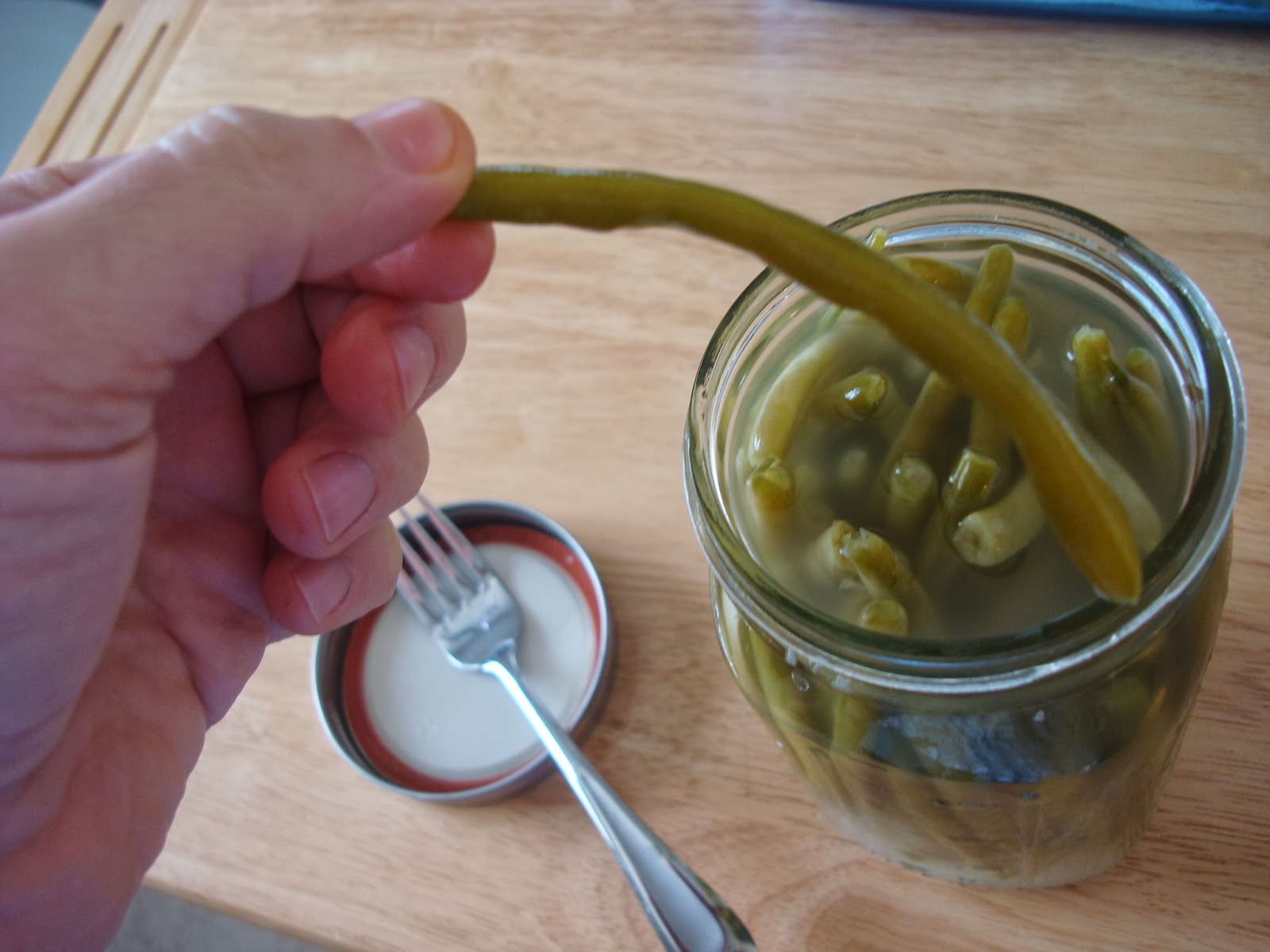
I packed them in with a lot of garlic and dill. More than I used for the cukes. These were also quick pickles. By Friday, they were ready.


If you're used to fresh pack vinegar pickles, the cloudy brine might look a little alarming. It's cloudier than your store bought pickles for two reasons.

One, fresh pack pickles go through the canning process to kill all microbes. I'm creating petri dishes to culture as many lactobacilli as possible. Much of the cloudiness comes from masses of bacteria. Yum.


See the scale in the picture? That's right. 1 micron. Picture an inch. There's 25 thousand microns in an inch. If the lactobacilli were the size of fish oil pills, the green beans would be a two and a half miles long.

Two, I'm using table-grade sea salt for my brines. It has added magnesium chloride. You've seen athletes chalk their hands in magnesium chloride for a better grip in rock climbing, weight lifting, and gymnastics. But not for pool cues. That's silicon and aluminum. Morton started adding it to salt as an anti-caking agent and their famous slogan was born.


In addition to giving little girls something to pour all over the sidewalk, magnesium chloride clouds brine. So there.

The so-called Dilly Beans were super duper. Very garlicky and pickly. I took a jar to poker night where they must have been a hit. I came home with an empty jar.


I also started a second sauerkraut batch. You can see the color change of the first batch at one week in comparison to the new batch.


Also, look at the bubbles. That's the exciting thing about fermenting. It's not so much a jar of vegetables as it is a little wilderness, churning and frothing with living things fighting for survival. At night, when it's quiet, you can lean down, and listen to the gas escaping from the lid. It's like listening to it breathe.

By the second week, the fermenting had stopped in the first batch, so I've moved it to fridge. It came out sour and very, very crunchy. I haven't decided how to eat it yet, but I have it on good authority that sauerkraut soup is pretty much the bees knees.

This weekend, we moved from leaves and fruits to roots.


I'm doing spiced carrots and Korean-style pickled garlic. If you've ever peeled six bunches of garlic by hand, then you know how much fun this was. The carrots will be done in about two weeks. The garlic, however, will take at least six months. So we'll know how those did at the first of August.


Today, the whole house smells like garlic and vinegar.

Also, I've learned that people into fermenting are called fermentos. So, I guess I'm a fermento now. For some reason it sounds slightly less pretentious than birder.

Parting Shot
This weekend's forecast: snowy with a chance of squirrels.


1/18/14

We're in a Pickle

The New Year has arrived and so has snow.


A lot of snow. When I lived in Texas, snow was this rare wondrous sort of thing. Here, it's pretty common, but being so, you develop a more intimate relationship with it. It can come down in small, hard pellets that squeaks when you step into it. It can come down in these massive tufts that looks like someone dumped a load of down pillows into a wood chipper. It can come down in this fine sort of dust that swirls and eddies, forming white dirt devils and leaving the parking lot covered in miniature wind swept dunes.


The Inuit are purported to have a hundred words for snow. This isn't entirely true. In Inuit, you tack nouns and adjectives together to make new, longer words. Like German. So, rather than having a hundred distinct words for frozen precipitation, like sleet, hail, snow in English, they have cobbled-together descriptive words. Like whitesnow, fluffysnow, snowontheground, snowthatfliesupyournostrilsandmakesyournosebleed.


Even living as far south as Illinois, you think about snow differently. You look out the window in the morning, not to see whether it's snowing, but to see what kind of snow it is.


Since we can't get out and run or take pictures of Lincoln statues, we've started doing inside activities. And this year, 2014, this will be the year of the pickles.

All Puckered Out
Pickling is what happens when acid goes to work on vegetables. It changes the molecular structure of the cell walls, making the vegetable crispy, preserving them.

When people who pickle say pickle, they mean any pickled vegetable. We associate pickle with pickled cucumber thanks to Jewish immigrants in New York. They opened up delicatessans and served a pickled cucumber spear with every sandwich and a great American passion was born. In the UK, pickled cukes are called gherkins and the word pickle refers to pickled onions served in pubs.

There are two types of pickles. Fermented and Fresh Pack.

Fresh Pack pickles are what you see lining the grocery store shelves. Look next time you go. Most of the jars will say Fresh Pack on the label. You dunk a cucumber in vinegar (acetic acid) and then send it through the canning process. It can then last  for months if not years at room temperature.

When you ferment pickles, you let our old friend from the cheese-making days do the work. Lactobacillus. You pack the cukes in a salt water brine to kill the bad bacteria and let the good bacteria eat the cucumber sugars and poop out lactic acid. The lactic acid pickles the cukes. Since fermented pickles have live cultures, you have to store them in the fridge when they're ready, to slow down the ferment.

On the other hand, fermented pickles can be canned like fresh pack pickles once they've reached the level of fermentation you prefer.

Controlled Rot
That's what fermenting aficionados call it. Everything is covered in bacteria that are waiting for an opportunity to start munching. The benefit of fermenting vegetables (over fresh packing them) is that the bacteria preserve many of the vitamins and nutrients that the vinegar destroys.

We ferment meat and milk to get corned beef and cheese. We ferment grains to get beer. And we ferment vegetables to get pickles. Most cultures have their own pickled dish. Notably the Germans with their sauerkraut, the Koreans with kimchi, and the Japanese with miso.

I thought at first that the US was unique in the fact that we didn't eat many fermented things. Then I looked into to it. Coffee and cacao (chocolate) beans are fermented after picking and before processing. Soy sauce is fermented. Our favorite hot sauces, Louisiana, Tabasco, Cholula, Tapatio, are all made from fermented peppers.

From China, we get our most notably American ferment. Ketchup. The original Chinese sauce was made with mushrooms. Making ketchup with tomatoes became popular in America because we didn't know what else to do with tomatoes. Most people accepted the fact that unfermented tomatoes were poisonous. Scientific consensus didn't shake the paranoid myth until the mid-1800s and tomatoes didn't become a household staple until Campbell starting canning them in the 1890s.

The Smell Jar
Our pickling odyssey begins with cucumbers and cabbage.


My first cucumber pickles are quick pickles, or half sours. I added a little bit of vinegar to kick start the pickling, then let lactobacillus do the rest.


They were ready after three days, but needed a full week for the flavor to develop. These tasted better and had a better crunch than any store bought pickle I've had. Ever. Maybe with the one exception of those giant barrel pickles I used to get at movie theaters.


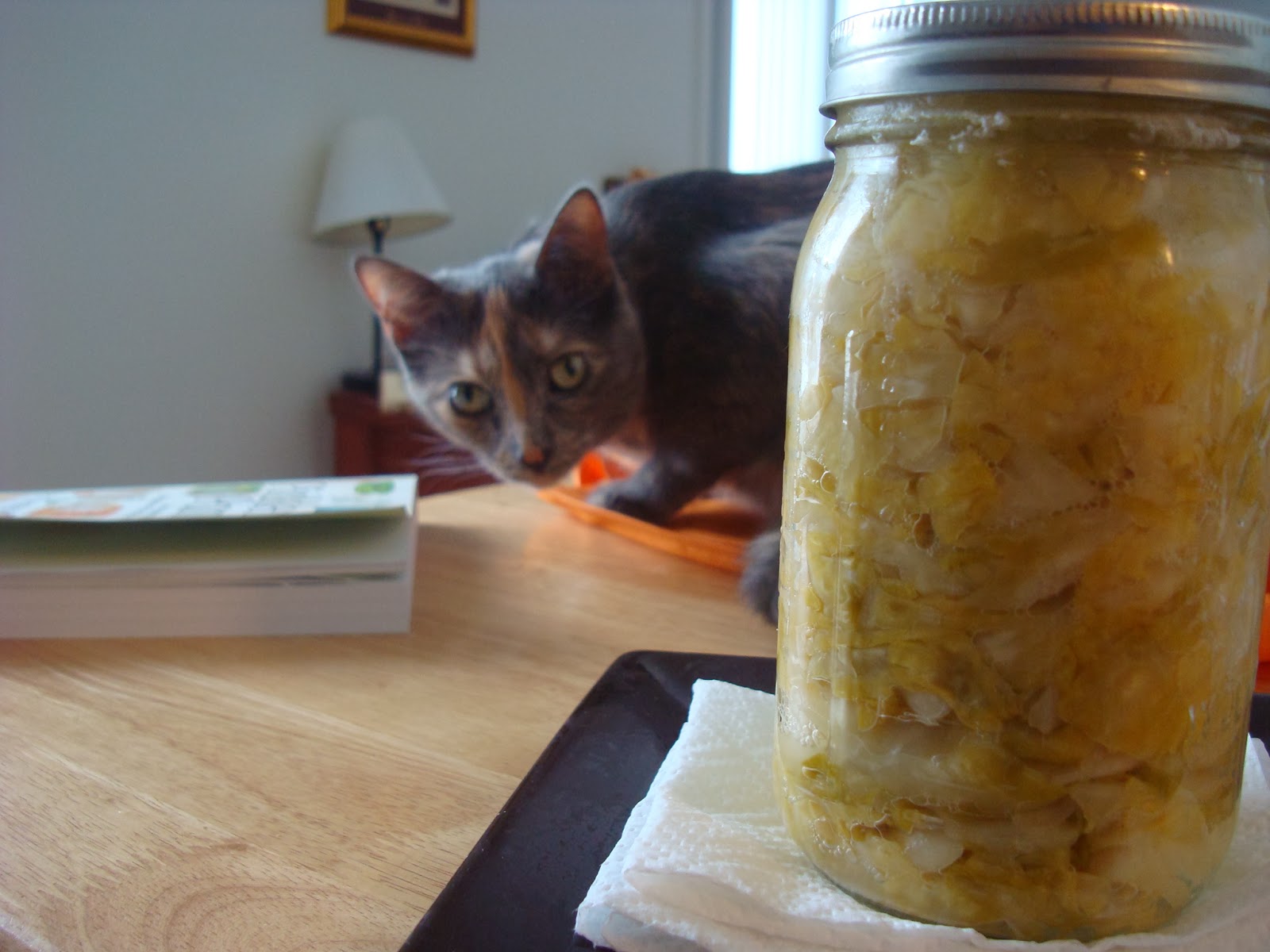
To make sauerkraut, I started with fresh cabbage. I basically chopped and bruised the cabbage and added salt. The salt pulled out the liquid and the cabbage formed its own brine.


I taste this every few days to monitor the flavor development. The flavor has slowly progressed from salty to pickled. It will take 4-6 weeks before it's ready, but after one week, you can already see the change in color. The little bubbles are bacteria poop.


Now, the whole house smells like rotting cabbage. Aine's not entirely thrilled. But Pig's curious.


Battling Entropy
Aine's accustomed to working 16 hours a day without downtime. Such is Grad Life. She can't handle all this free time. Have you seen the opening scenes of Apocalypse Now where Martin Sheen goes stir crazy and karate chops his hotel mirror? That's Aine.

So over the break, she set about organizing our lives. The clutter and slovenliness started to wear on her. Here's one example. The linen closet.

Before:


Obviously After:


Parting Shot
Not for the faint of heart. The grisly scene of the New Year's Day Snowman Massacre. May their souls find peace.