11/13/12

Harker Hall

The Building
Nathan Clifford Ricker designed a state of the art science facility for the University of Illinois in 1878. I mean, this place was top notch for the 1870s, the premier science lab in the country. Building next to the old University Hall, he designed his Chemistry Laboratory in the Second Empire style.


University Hall has since been demolished and replaced by the Illini Union. Since The Elephant and University Hall no longer exist, the Chemistry Laboratory, now called Harker Hall, is the oldest surviving university building. The oldest surviving structure on campus is the Mumford House next to the McFarland Bell Tower. It was built as a residence in 1870 and the campus sort of oozed around it.


The Style
Many of the architectural styles we see around town are revival styles: Romanesque, Tudor, Colonial, Gothic. Each style's popularity stemmed from the fact that it borrowed heavily from a historical style. The trend developed to revive a style that spoke to the values or aesthetics of a previous historical period. They were vintage. They were retro. They were built to look old-timey. Styles like Italianate and Second Empire, in contrast, represented the cutting edge of architectural ideals. They were the hottest new thing at the time. Like Art Deco in the 1930s. The Second Empire style saw its heyday from the 1860s to the 1890s.

How you know it's Second Empire:
  • Symmetrical Facade
  • Square or Rectangular Floor Plan
  • Mansard Roof (ZOMG!)
  • Small Tower or Cupola (This is where poeple confuse Second Empire with Italianate. Harker Hall does have a little tower, but you can't see it from the ground. If you zoom in on Google Maps, you can see it.)
  • Dormer Windows (These are the windows that poke out through the Mansard Roof like creepy eyes.)
  • Small Entry Porch
  • Patterns on Roof
The Roof
Francois Mansart revived the popularity of a double-pitched roof in France in the early 1600s. The double-pitched roof appeared as an element in French Rennaissance architecture, but Mansart brought it back as a way of creating living quarters in attics. The roof kept his name when it saw another revival during the French Second Empire.

This is my favorite type of roof. The Mansard roof is synonymous with Second Empire. If it has a Mansard, it's Second Empire. If it's Second Empire, it has a Mansard. The capitol at Springfield is considered a NeoClassical/Second Empire mix due the Mansard roofs on the wings.


Your standard pitched or gabled roof meets in the middle and slopes down two sides like a pup tent. The two ends form gables.

Wikiwikiyarou
A double-pitched roof breaks mid-slope. The top tends to have a shallower pitch and the bottom a steeper pitch. You're probably familiar with the Gambrel roof, commonly seen on barns.

Wikiwikiyarou
Both of these examples have two sloping sides and two gabled sides. If you take a pitch roof and give it four sloping sides, it becomes a hipped roof. A hipped roof has no gables.

Wikiwikiyarou
A Mansard is a double-pitched hipped roof.

Public Domain
You'll see other types of roofs, a flat roof for instance, but 90% of the time, you'll see a combination between these four elements: single-pitched, double-pitched, gabled, and hipped.

The Empire
Now to the question I know you've all been asking: qu'est-ce que c'est le Second Empire? I'll tell you.

You've all heard of Napoleon the Great. He shot the Sphinx, got lost in Russia, broke all his own rules at Waterloo. He had a nephew who wasn't so great, Napoleon III. Elected the last president of the French Republic, he decided he liked the job and would hang around for a while. He declared himself Emperor in 1851. Victor Hugo went into exile out of protest. Exile must have suited him, though. He wrote Les Miserables while living in Guernsey.

In declaring himself emperor, Napoleon III dissolved the Second French Republic (le Deuxieme Republique) and created the Second French Empire (le Second Empire), the first being his uncle's empire. Before you ask, I don't know why the French use deuxieme for one and second for the other. The French don't even know.

Public Domain
Napoleon III allied himself with the British against the Russians during the Crimean War. You know the Crimean War from the famous charge of the Light Brigade at the Battle of Balaclava ("it was not theirs to reason why, it was theirs to do and die"). Also, he built lots of buildings with Mansard Roofs. Post Civil War Americans thought the style pretty spiffy and started building Second Empire structures all over the place. Napoleon III also had a set of aluminum tableware he saved for special guests. Everyone else had to use gold forks and spoons. At the time, the refining process for aluminum was so time-consuming and costly, it was the most expensive and prized metal. Gold and platinum were rusty copper by comparison. For this reason, the Washington Monument is capped with an aluminum pyramid.

That's all super duper, but none of it, not even the fabulous Mansard roof, is Napoleon III's most well known and lasting legacy. French people don't like Germans. So, like his uncle before him, Napoleon III attacked Prussia in a bid to expand his empire to the brat munchers. The two armies met at the Battle of Sedan in 1870, the first battle in history in which an army tactically deployed machine guns.

Public Domain
The Prussians surrounded the French and wiped the floor with them in a fast, decisive victory. As part of the reparation package, the French were forced to transfer control of Alsace-Lorraine to the Prussians. The territory swap, French bitterness, and Prussian insecurity in the aftermath of Sedan created the conditions for the outbreak of World War I. In the first month of the first world war, before they started digging trenches, the armies were attempting to force a quick, decisive victory. Generals on both sides acknowledged they were trying to create a Second Sedan.

Back to School

The University of Illinois has almost as many architectural styles as it has buildings. I've been able to get pictures of some and I have a list of others to photograph, so this is just the first of multiple posts. We should start a quick and dirty history of the University. It will explain pretty much everything.

History of the University 
In 1862, President Abraham Lincoln signed the Morrill Land-Grant Colleges Act of 1862, providing for the establishment of publicly-funded universities in the US. Texans founded Texas A&M under the Morrill Act. After the war, the state of Illinois passed the Griggs Bill of 1867 allocating land in Champaign-Urbana for the creation of a university. Like all land-grant colleges, the university in Champaign-Urbana was intended to be an Agricultural and Mechanical college, however, for reasons lost to history, the planners didn't want to bother with the the initials A&M. So they named the new school Illinois Industrial University. By the mid-1880s, the university had added liberal arts to the curriculum and the administration felt that current name sounded like a reformatory, a school for delinquents, so they switched to University of Illinois.

University Buildings
Classes commenced in an old seminary building, nicknamed The Elephant because of its size and ugliness. I found no official word on the style of The Elephant, but it looks Italianate to me. It had dorms, kitchens, and classrooms and could accommodate 130 students. In the 1880s, The Elephant fell over in a rain storm and the university built the Beckman Institute for Advanced Science and Technology in its place, about half a mile due north of the main quad.

The Elephant:

http://www.fs.uiuc.edu/
By the 1870s, the student population started to burst at the seams, so the university hired John M. Van Osdel to design University Hall in the Second Empire Style. A few years later, architect Nathan Clifford Ricker built the Chemistry Laboratory next to it, also in Second Empire.

Ricker graduated from the Illiois Industrial University in 1873, the first person in the US to earn an architecture degree. He designed the Chemistry Laboratory and five other buildings on campus.

University Hall:

http://physics.illinois.edu/

Bringing Order to the Chaos
For the most part, the University has a mish-mash of architectural styles. They built buildings in the next available spot in the trendiest new style of the time. That said, the University grew from north to south and if you walk along that line of growth, you can almost see the development of architectural fad over time. Second Empire dominates the north part of campus, Queen Anne and Romanesque Revival line the center, and Georgian Revival adorns the southern end. Also, along the central axis lie the four quads.

This helter skelter planning drove administrators crazy. In the 1920s, they hired Charles A. Platt to sort it out. A prominent New York architect, Platt had designed homes and bulidings for the Astors, the Roosevelts, the Smithsonian, and MIT. At the southern end of the north-south axis, Platt planned an additional east-west axis (along Gregory Road, I believe). If you look at a map of the university today, you can see it still forms a rough triangle connecting those two axes. Platt designed buildings in the Georgian Revival style along the southern axis and dotted through the remainder of campus to unify the campus with a common architectural theme.

That gives you a rough overview of how the campus developed. In the next post, we'll look at some of the buildings.

11/7/12

Chili Weather

So, winter is coming. There's no way around it. Since it feels cold pretty much all the time now, we've resorted to eating soup everyday. Fine by me. I found a website with a list of the 20 best soups or some other ridiculous promise. We've tried a few of them. Some with a bit of success, some with less. I mostly followed the recipes I found there.

Turkey White Bean Chili
I know what you're thinking because I thought it first. Aine said, let's try Turkey White Bean Chili. I said, that looks totally gross. Then she said, blah blah blah blah. So, I agreed, just to make the noise stop.

This soup tasted delicious. This one is definitely going into rotation. And by rotation, I mean the Excel document listing all of our recipes that calls a Rand() function to randomly sort the list so we don't have to spend time deciding what to eat in a given week. Pretty much.

Recipe:
olive oil
1 lg yellow onion
1.5 tbl chili powder
1 tbl garlic chopped
1.5 tsp cumin
1 tsp oregano
salt and pepper to taste
3 15.8 oz can great northern beans
6 cups chx broth
2 lbs chopped turkey cutlets
2 cans 8oz tomato sauce
1/3 cup fresh cilantro
2 tbl lime juice

Basically, I sauteed the onions and spices in the olive oil until the onions for a little while. Then I added all the other ingredients (I added the turkey raw), brought it to a boil, simmered for 15 minutes to kill the vegetative cells of Bacillus sp. and served.


Beef Tagine
I let Aine talk me into this one, as well. Tagine (pronounce it like teh-ZHEEN) is a traditional stew from North Africa. St. Augustine probably chowed down on Tagine while he sat around revolutionizing Christian belief. Everything you thought you thought about the Bible, well, Augustine thought it first. The stuff he didn't steal from Plato, of course.

As we all know, when one dines on a North African stew, one must serve said stew with a North African starch. So, I made couscous, which is basically pasta, rolled into tiny little balls.

Recipe:
2 teaspoons paprika
1 teaspoon ground cinnamon
3/4 teaspoon salt
1/2 teaspoon ground ginger
1/2 teaspoon crushed red pepper
1/4 teaspoon freshly ground black pepper
1 lb beef roast, cubed
olive oil
4 shallots, quartered
4 garlic cloves, chopped
1/2 cup fat-free, lower-sodium chicken broth
1 (14.5-ounce) can no-salt-added diced tomatoes, undrained
1 lb cubed peeled butternut squash
1/4 cup chopped fresh cilantro

Okay, you mix the spices, then toss the beef cubes in them, until the beef is completely coated and all the spices are sticking to beef. Then I added the beef to the shallots and garlic and sauteed them in the olive oil until everything was browned and caramelized and tasty-looking. Then I added the broth, tomatoes, and butternut squash, brought it all to a boil, then simmered it for 15 minutes. I garnished it with the chopped cilantro.


Let's be honest here. I thought this was disgusting. Aine wasn't blown away either. Maybe you're one of those people who likes winter squashes. If so, give it a try. But between the cinnamon, ginger, and butternut squash, I felt like I was eating pumpkin pie with chunks of beef in it. My suggestion: DO NOT BUY.

Creamy Chicken Noodle Soup
A soup that needs no introduction. With a twist. It calls for a cup of celery and a cup of carrots. I hate when they ask for celery in a recipe, because you have to buy it in this five pound bunch just to use one stalk. So I've started buying those little plastic containers in the produce section with the pre-chopped celery. Yes, it is more expensive, but I'm not throwing away food. This time, I found one that had half carrots and half celery and used the whole container. Every recipe I find asks me to peel my potatoes. I don't do this for two reasons: 1) life is too short and 2) we both like the skin. I've read some experts who say the skins are packed full of vitamins and nutrients that are lost during peeling. I've read other experts who say that's a bunch of hogwash. So.

Also, we just used pulled chicken for the chicken portion of this recipe. You know those whole, roasted chickens you can get at the grocery store, all hot and juicy in one of those plastic containers? I bought one of those and pulled all the meat off the bones and tossed it in the pot. I usually have to barricade the kitchen when using a whole, roasted chicken (there's another recipe in which I use them). The only thing Aine likes more than whole, roasted chicken is potatoes. If I'm not careful, she lunges for the chicken like a zombie going for fresh brains, and makes a most atrocious mess.

Recipe:
olive oil
1 white onion chopped
1 cup diced carrots
1 cup sliced celery
1 garlic clove, minced
1/4 cup all-purpose flour
1/2 teaspoon dried oregano
1/4 teaspoon dried thyme
1/4 teaspoon poultry seasoning
6 cups chicken broth
2 lbs potatoes diced
1 teaspoon salt
roasted chicken
1 cup evaporated milk
half a package uncooked wide egg noodles

I followed this recipe pretty closely. I sauteed all the vegetables in olive oil for several minutes, then I added the spices and flour and cooked until browned. I added the broth, potatoes, and salt, brought it to a boil, and simmered 10 minutes. Then I added the chicken, milk, egg noodles, brought it to a boil again, then simmered 10 more minutes.

We both found this dish quite tasty. And filling. This is a good, old fashioned, stick to your ribs recipe.


Other Soups
We made a potato soup the other day, strictly following the recipe. Aine's half Irish so potatoes are like cocaine to her. We were too busy eating it to take any pictures. Next time I make it, I'll probably leave out the butter, flour, and milk and trust in the natural creaminess of the potato.

Also, Aine asked me to make a corn chowder. I didn't really use a recipe. I just threw 2 lbs of chicken, 2 lbs of corn, and 2 lbs of potatoes into a pot with half a pound of bacon and chicken broth and spices. And chopped onions and chopped garlic, come to think of it. It sounds like a lot of food, but we ate it for three nights, so six servings. Oh yeah, I also pureed 1/3 of it at the end to make it creamy.

Recipe Sources:
http://stolenmomentscooking.com/loaded-baked-potato-soup/
http://www.myrecipes.com/recipe/beef-tagine-with-squash-50400000109584/
http://www.myrecipes.com/recipe/white-bean-turkey-chili-10000001545785/
http://www.myrecipes.com/recipe/roasted-chicken-noodle-soup-10000000520991/

Parting Shot:
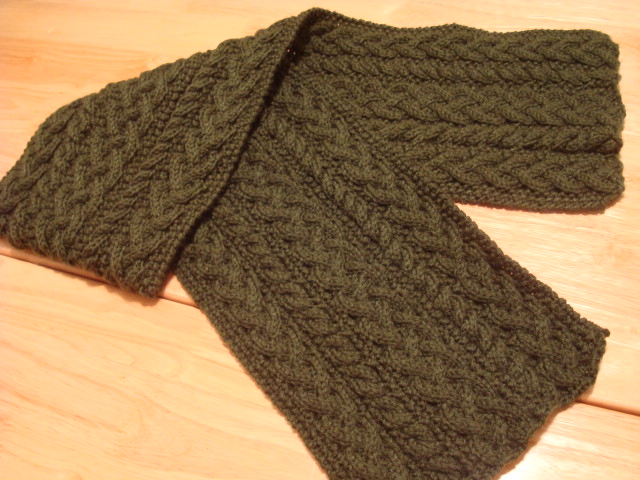
Since Illinois has turned into this frigid, tundra-like hellscape, we're forced to modify our wardrobes. I made this reversible cable scarf for Aine:


And finished this geometric scarf she started for me about a year ago. I had about an inch of knitting to start with:


I have some other things to make for myself, like gloves, additional hats, etc. to keep from freezing to death. After I feel myself well accoutred, I'll complete any other projects I might have promised anyone else. You'll probably have to remind me, though.

11/6/12

Democat and Repuplican

A Jabbo Election Day Special Edition
It's been at least four years since I've heard as much polarized rhetoric and paranoia. Republicans believe that if Obama wins, the nation will become a godless, socialist wasteland like Stalin's Russia. Democrats believe that if Romney wins, the nation will slide back into the feudal squalor of the Middle Ages.

Well, Crankles and Piglet are unimpressed with your dire forebodings:


11/5/12

State Symbols (Part 2)

State Insect
In 1975, a third grader from Decatur proposed that Illinois make the Monarch Butterfly its state insect. After overwhelming political pressure from schoolchildren, the legislature caved and passed a bill apotheosizing the butterfly.

Tony Hisgett
The Monarch Butterfly (Danaus plexippus) has been legislated into official status by 6 other states, including Alabama and Texas. The only butterfly that migrates, the Monarch flies south to Mexico in the fall and returns in the spring. It's also one of the few insects that can make a transatlantic flight. The antennae of the Monarch contain a chemical called cryptochrome which reacts to light on the violet or blue end of the spectrum. When activated by blue light, cryptochrome becomes sensitive to the earth's magnetic field. Monarchs can't tell the difference between north and south, but they can align themselves on the north-south magnetic lines. It's basically a chemical compass. Many migratory birds have this chemical in their eyes. Don't feel bad. Humans also have cryptochromes that play a role in circadian rhythms, or your sleep-wake cycle. Some scientists think cryptochromes might provide insight into seasonal affective disorder.

The Monarch butterfly has no natural predators. The Monarch caterpillar eats milkweed and only milkweed. A chemical in milkweed, cardiac glycoside, builds up in the caterpillar's body and persists into adulthood. This chemical, often used medically in patients with heart failure, causes strong heart contractions. In an otherwise healthy individual, it can cause a heart attack. Butterflies don't have hearts (insects have a sort of open pump that swishes fluid around inside their body cavities), but birds and mammals who try to eat the Monarch do. Predators have long since learned to give the bug wide berth. Indigenous people from South America used extracts from milkweed to poison the tips of their arrows.

In the early 90s, then-representative Leon Panetta of California authored a bill nominating the Monarch Butterfly as national insect of the United States. Representative Steve Neal of North Carolina claimed any insect representing monarchy has no place in a Democratic society. He wrote a bill proposing the Honey Bee as a hardworking, Biblically-noted alternative to the monarchist tendencies of Panetta. Around this time, the Africanized Honey Bee crossed the Rio Grande. Also, the bee is totally Communist. Both bills died in sub-committee.

State Soil
Drummer Silty Clay Loam. The name Drummer comes from Drummer Creek, a tributary that flows into the Sangamon River just north of Champaign. Loam is a soil type that consists of sand, clay, and silt in specific quantities. Sand and silt both appear as rounded grains, sand visible to the naked eye and silt visible under a microscope. Clay, under a microscope, looks like flat, little plates. Imagine you have a shrink ray like Rick Moranis in Honey, I Shrunk the Kids. You shrink yourself to the point that sand grains look like large beach balls. At that size, you could use silt grains as golf balls and if you put clay particles in a bowl, they would look like corn flakes. Now unshrink yourself. Mix all those particles together and you have the dark, fertile loam, the best possible soil for growing field corn, field soybeans, and Christmas trees.

You can thank glaciation for much of the terrain in Illinois. As recently as the Pleistocene Era, about 75,000 years ago (back when we had woolly mammoths), a glacier covered most of Illinois. No one knows why a glacier advances or recedes, since climate change is obviously a myth, but when it did recede, it left the Illinois we know and love today.

Glaciers begin their lives as big piles of snow. The piles get so large that the snow compacts into giant cakes of ice that slide downhill. Voila! As the ice sheets migrate, drawn by the siren song of gravity, they grind all the rock beneath them into fine particles, like sand, silt, or clay. The Illinois glacier stopped near the Mississippi River, then started to melt. As it melted it revealed the silty clay loam that covers most of the state.

http://dnr.state.il.us/education/biodiversity/emaps.gif
All of the major Illinois rivers, the Illinois, the Sangamon, the Vermillion, the Kaskaskia, were formed as melting glacier water cut through the soft loam looking for a bigger body of water to join.

It also left some other features, peculiar to glacial activity. If a big chunk of ice breaks away from the glacier body, it melts by itself. I mean really big chunk of ice, some were a mile or more across. As the ice melts, it soaks the soil beneath it, making it soft. The weight of the ice chunk pushes down into the soft soil and sediment washing away from the melting glacier piles up around it. A cauldron-like depression forms, called a kettle. Kettles, when they melt, can form these roundish, deep kettle lakes like you see across Siberia and Northern Alaska (Wiley Post flew Will Rogers into one of these). Thoreau lived next to a kettle lake for a while called Walden Pond. Sometimes, though, if decomposing organic matter creates acidic conditions, the kettle becomes a bog. Volo Bog northwest of Chicago is one such bog.

My favorite glacial formation is called a moraine. Glaciers bulldoze massive piles of soil, rocks, and boulders in front of them as they move downhill. When they recede, you're left with a ridge called a moraine. If you've ever driven to Alberta, Canada, you had to drive through a moraine in the southern part of the province. Just northwest of Champaign, you can see glacier droppings at Moraine View State Park.

Here's where it gets crazy. Long Island in New York is a moraine formed by glacier activity. If you look at a map, you can see the mountain corridor that the glacier moved through, piling up mounds of rock and dirt that would later make a home for Brooklyn, Queens, and the Hamptons. The glacier eventually melted, leaving behind the Hudson River.

Sémhur

11/4/12

Election Sectionalism

Food for Thought
So, I'm reading a biography of Abraham Lincoln (Lincoln by David Herbert Donald) and I flipped to a map of the states preceding the Civil War. I thought it looked eerily similar to a recent map I saw online of states preceding the Tuesday election.

I'm not going to draw correlations between the two maps. You could easily spin the argument in either direction, even over a single issue, like healthcare. The political issues dividing the nation in 1860 are bad memories and foregone conclusions to us in 2012. The political issues dividing us today would be largely incomprehensible to the Americans of 1860. An attempt to draw a line from one set of issues to the other would be sloppy scholarship. And stupid.

I'm also not trying to draw conclusions about the results of the 1860 elections that could be applied today. Again, completely different political climates. Anything said to the contrary would be tantamount to paranoia.

What I find interesting is how the polarization resulting from a two party system (why anyone thought that was a good idea baffles me) falls roughly along the same geographic lines that it did over 150 years ago. How, in a time when technology has connected the world in a manner unprecedented in human history, our political beliefs are still determined largely by our zip code.

US Map 1863

Public Domain
US Election Results 2008

Public Domain
Note:
The modern two party system we have today, Republicans vs Democrats, was born in that 1860 election. From the 1870s into the 1920s, politics fell along the same geographical lines, only with the Northern States going to the Republicans and the Southern States going to the Democrats. After the Great Depression, politics vacillated wildly. For the most part, and I'm making generalizations here about electoral college results, during the 30s and 40s the maps look almost all blue. During the 50s, the Eisenhower years, the maps reverted back to the pre-depression divisions, blue in the South, red in the North. Kennedy's election results are all over the map. Johnson's map is all blue. The Nixon elections are all red. The Carter election has an East/West split, the West going Republican and the East going Democrat. The Reagan/Bush maps are almost all red. It's not until the first Clinton election that you see the modern blue North/red South election results that we get today.

11/2/12

Illinoyancing with the Stars

When Mom came to town a couple weeks ago, we went on a little tour of campus. On that tour we saw the University of Illinois Astronomical Observatory. I had a vague notion that it had some historical value, but I didn't realize how much until later.

Architect and U of I Professor Charles A. Gunn designed this Observatory built in 1896. He built it in the Colonial Revival style, a somewhat fuzzy term, but I'll explain that in a later post. It served as a location for astronomical research into the late 1950s. Since then the University only uses it for instruction and random events open to the public. The Observatory entered the National Historic Registry in 1989.


The first director of the Observatory, Joel Stebbins, pioneered the science of photoelectric photometry. Yes, I'll explain what that means. Before Stebbins, astronomers measured stars by their apparent magnitude, a fancy name for how bright it looks when you crane your head back at night and look up at the sky. This gave scientists very inaccurate information about stars: the Earth's atmosphere filters a lot of light and it takes no account of distance. One star may be bigger and brighter than another, but if it's farther away than the other star, it looks smaller and dimmer.

In the early 1900s, Stebbins, instead of using his eyes, started recording information with a photoelectric cell. You've seen photoelectric cells on calculators and the roofs of houses. They are the source of solar energy. They absorb light and convert it to electricity. Basically, he directed light coming through the telescope into a photoelectric cell to perform photometry, the measure of electromagnetic radiation.

What is electromagnetic radiation?

Good question. Imagine you're sitting in your bathtub, watching your rubber ducky floating in front of you. If you pat the water, you create these little ripples that make the rubber ducky bob up and down. What happened? You created energy that moved through the water in the form of waves. If you pat the water lightly, you create small waves and if you pat the water vigorously, you create large waves. The size of the waves affect the behavior of the rubber ducky. Small waves make it bob slightly; large waves make it rock like a boat.

That was simple. You can see both the waves and the effects. What about waves you can't see? Clap your hands. You just created waves of energy that move through the air instead of the water. Instead of making a rubber ducky bob up and down, these waves enter your ears as sounds. If you clap lightly, you create small, soft waves. If you clap vigorously, you create large, loud waves.

Here's where it gets crazy. Imagine you're a big yellow ball of fire. We'll call you the Sun. Deep in your belly, you're squishing Hydrogen atoms together to make Helium atoms in an act called Nuclear Fission. Nuclear Fission releases energy in the form of waves that move, not through water or air, but through the electromagnetic field. Just like the size of the waves in the water have different effects on the rubber ducky, the size of the waves coming out of you, the Sun (or any star, for that matter), has very different effects on pretty much everything.

We call very tiny electromagnetic (EM) waves X-rays. These very tiny waves can pass through soft tissue, but not dense bone, so doctors use them to take pictures of fractures. If the waves get a little bigger, they become UV rays, that don't pass through tissue. Instead, your skin absorbs them and burns. When the waves get a little bigger they become visible light. These waves bounce off of just about everything, but they are absorbed by the rods and cones in your eyes.

Going up the scale, we have infrared waves, also known as heat. There's a thin line between infrared waves and visible light, which is why on a summer day, you can see the waves rising from the hot concrete. Also interesting: UV waves are small enough to pass through the windshield of your car. Your car seat absorbs them, then releases them again as infrared waves, which are too large to escape through the glass. This heats up your car in the summer in a process called the Greenhouse Effect.

If you increase the size of the waves again, you have microwaves, which we use to cook popcorn and TV dinners. After microwaves, the huges splashes in the EM field get very exciting. They become radio waves, which we use to watch TV, listen to music, talk on cell phones, and find our ways with Garmins.

Here's a chart that shows the EM Spectrum, all the different wavelengths side by side:

NASA
All of those different types of waves come out of stars. Once Stebbins found a way to accurately measure the EM radiation from stars, scientists gained the ability to determine many characteristics about stars: how big they are, how far away they are, what they're made of, and how bright they are. Instead of apparent magnitude, astronomers could measure absolute magnitude, the actual brightness of a star. Stebbins' practice yielded such precise information, it became the standard practice for all astronomers. Using this technique, scientists were able to position stars on the Hertzsprung-Russell Diagram. You will find an H-R diagram in any Astronomy book. It's like the Periodic Table for astronomers. It lays out all the known stars in the universe by brightness and color.

http://www.eso.org/public/images/
And we know all this about the universe because of work done at the University of Illinois.

Parting Shot
This is just for fun. Everything in space emits some sort of EM radiation. Even planets release radio waves that scientists can record and play back. The video below features a recording of radio waves from the planet Saturn. They've modified the signal a bit to render it audible to human ears, but this is the actual recording they released. The sounds of Saturn: